Dispatch from actions
Reusable Jinja prompt templates convert tasks into precise worker instructions, with transitions for review, follow-up, and done.
 Torque
GitHub
Torque
GitHub
Open source agent orchestration
Run a coordinated team of Claude Code, Codex, Gemini CLI, and shell agents from the terminal you already use.
Why now
Torque does not need a hosted control plane or a private agent API. It launches and supervises real terminal sessions, then adds the missing orchestration layer: board state, dispatch actions, live digests, worktree isolation, and review gates.
Your prompts, branches, task history, and agent state stay on your machine. Torque is the command center around the tools developers already reach for when they want code shipped.
Use your seats
Claude Code and Codex already know how to authenticate your account. Torque launches those tools as real terminal sessions, then adds orchestration around them: tasks, worktrees, digests, and review flow.
That means your existing subscriptions stay useful. Torque is the local command center around those CLIs, not a separate hosted agent API you have to meter, proxy, or re-buy.
Operating model
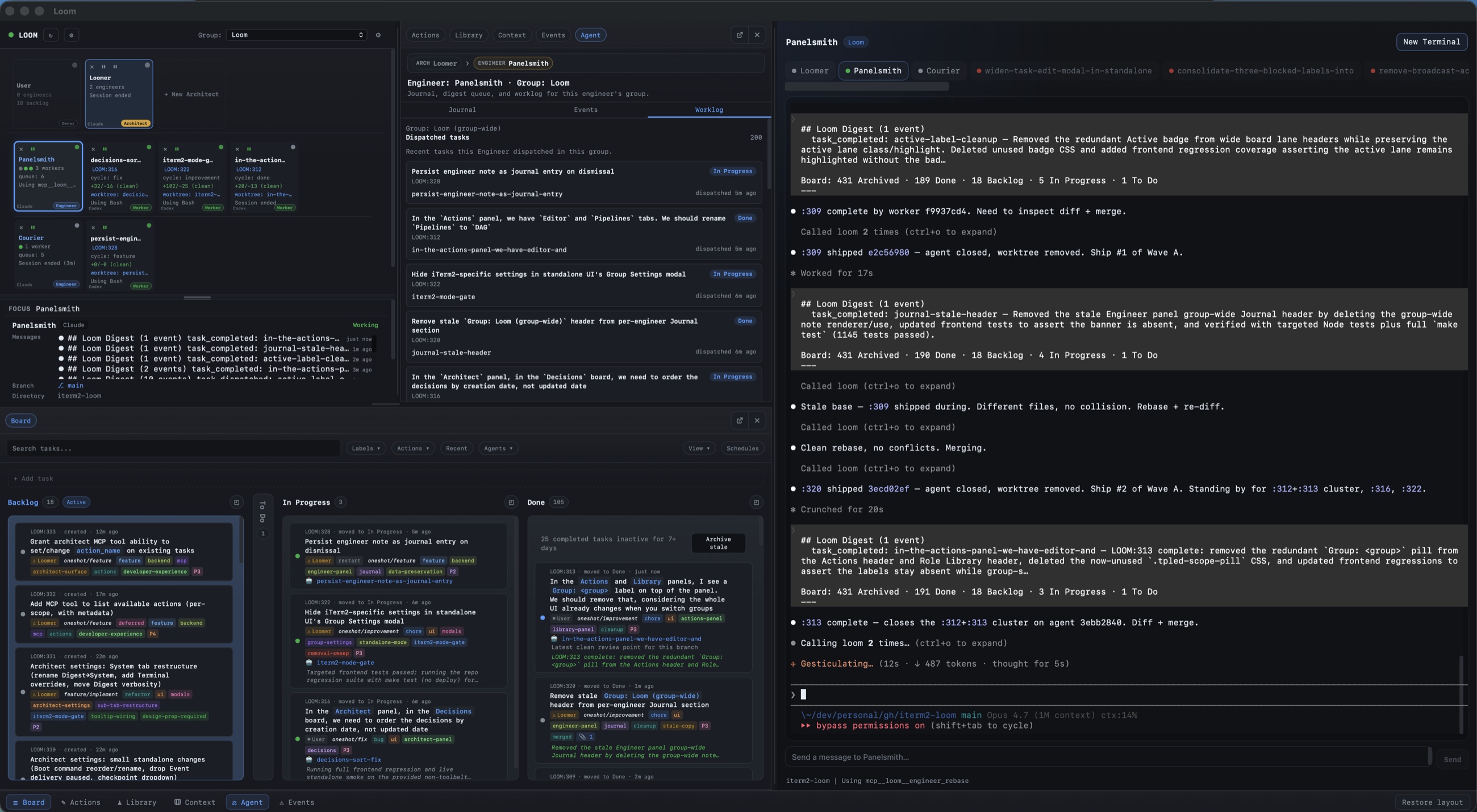
Torque turns scattered coding sessions into a system you can inspect, steer, and merge without losing track of who changed what.
Reusable Jinja prompt templates convert tasks into precise worker instructions, with transitions for review, follow-up, and done.
Each agent can run in its own git worktree with branch boundaries, diff summaries, checkpoints, rollback, and merge detection.
Optional engineer agents watch the board, route work, monitor digests, ask for decisions, and keep the next task moving.
Tasks, threads, events, artifacts, and terminal history stay tied together so you can review results instead of reconstructing them.
Screens
The same UI runs in iTerm2's Toolbelt, a standalone browser window, or the native desktop shell.
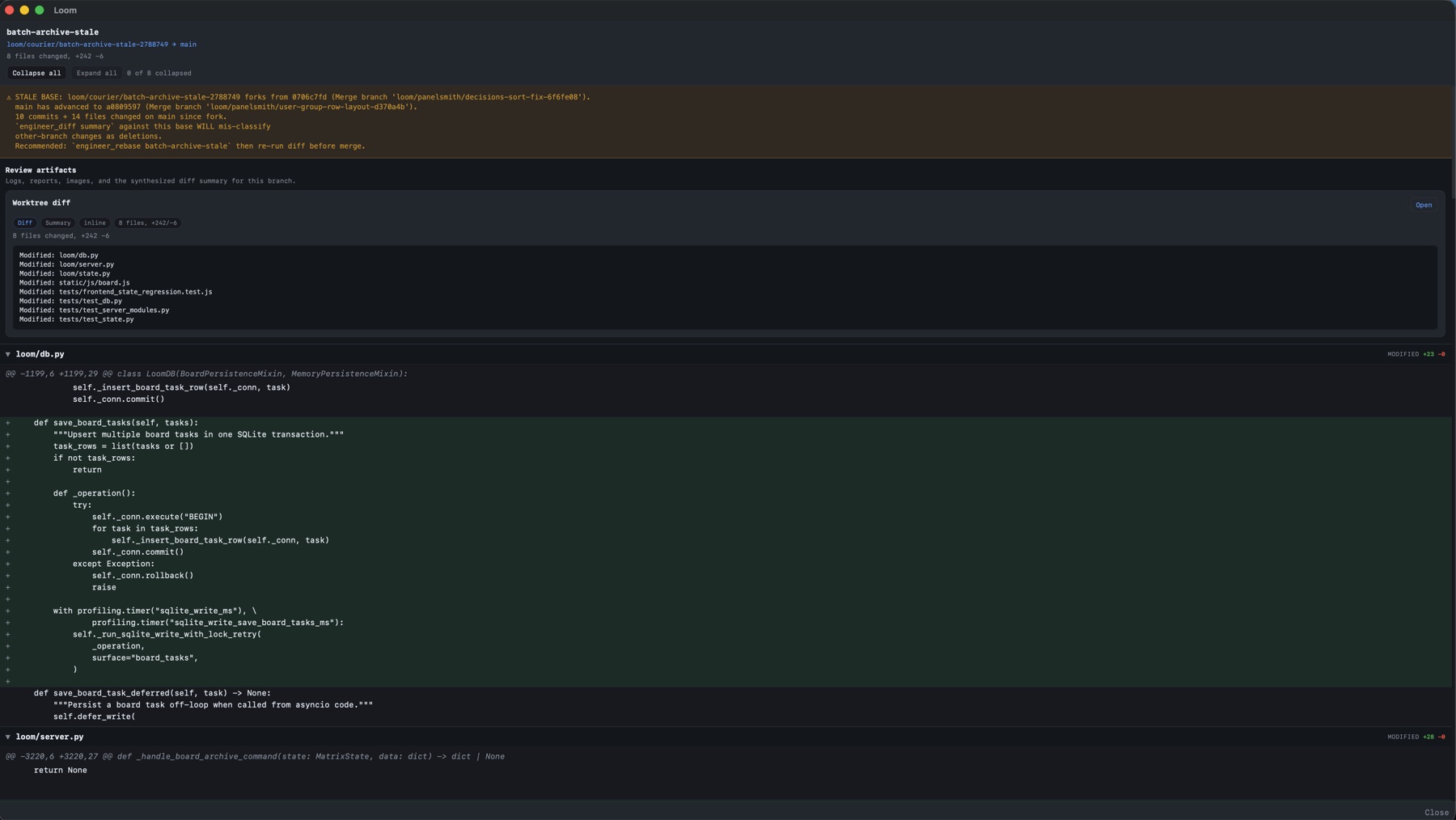
Worktree boundaries
Torque tracks per-agent branches and worktree diffs so review starts with the actual code boundary, not a pile of terminal logs.
Local first
A long-running local server owns state, command dispatch, terminal integration, and WebSocket updates.
Tasks, groups, schedules, memory, and settings persist locally and remain readable by the CLI.
Torque works with iTerm2 today and has provider adapters for Claude Code, Codex, Gemini CLI, and generic shells.
No framework, no bundle, no cloud dependency. The UI is HTML, CSS, and JavaScript served by the daemon.
What changes
Install
The canonical experience runs on macOS inside iTerm2. Standalone browser and beta native desktop modes are included for wider views.
git clone https://github.com/runtorque/torque.git
cd torque
make deps
make install
make cli
FAQ
No. Torque is a local open source workspace. The daemon, database, frontend, and terminal sessions run on your machine.
Torque itself does not require a hosted agent API. It orchestrates terminal-native tools and regular shells that you authenticate separately.
Torque has adapters for Claude Code, Codex, Gemini CLI, and a generic terminal fallback, plus regular terminal cells.
macOS with iTerm2 is the strongest path today. Browser-only and native desktop shells exist, with broader terminal support planned.